

DNA Motoring Running Boards
Our running boards deliver the perfect combination of style and function for your truck or SUV. Engineered with heavy-duty aluminum or steel construction, these side steps provide a secure stepping surface while protecting your vehicle’s rocker panels from road debris.
We design each running board with vehicle-specific mounting brackets for seamless integration with your factory mounting points. The textured step surface ensures reliable traction in wet or muddy conditions, while the corrosion-resistant finish stands up to years of daily use and harsh weather exposure.
Construction & fitment specs
Construction & Materials
We manufacture DNA Motoring running boards from premium-grade aluminum alloy or heavy-gauge steel, depending on the model you choose. Aluminum options deliver excellent strength-to-weight ratio while remaining rust-proof, making them ideal for coastal or high-moisture environments.
Our steel variants feature a multi-layer powder coat finish that resists chipping, scratching, and UV fading. Each tube undergoes precision mandrel bending to ensure consistent diameter and wall thickness throughout the entire length. The welded end caps are hermetically sealed to prevent water intrusion and internal corrosion.
Fitment & Compatibility
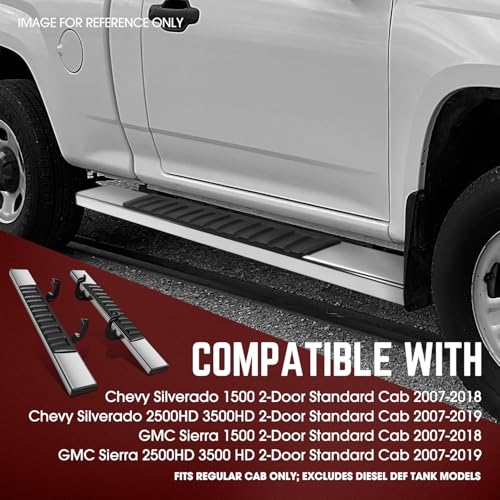
Every DNA Motoring running board system includes vehicle-specific mounting brackets that align with your truck or SUV’s factory frame holes. We engineer dedicated fitment solutions for Ford, Chevrolet, GMC, Toyota, Dodge, RAM, Nissan, and Jeep models spanning two decades of production years.
Our design team references OEM specifications to ensure proper ground clearance and approach angles are maintained. The brackets position the running boards 2 to 4 inches below the rocker panel, creating a natural stepping height that reduces strain when entering the cabin.
Installation Process
We design DNA Motoring running boards for straightforward bolt-on installation using hand tools. The complete hardware kit includes all mounting bolts, washers, lock washers, and brackets needed for secure attachment to your vehicle’s frame.
Most installations require only a socket set, torque wrench, and approximately 60 to 90 minutes of your time. The included instructions provide torque specifications for all fasteners, typically ranging from 35 to 45 ft-lbs for main frame bolts.
Complete Your Exterior Upgrade


Rated 4.8 by verified buyers


Running Board Questions & Answers
Running boards feature a wider, continuous stepping surface that spans most of the vehicle’s length, typically 5 to 6 inches wide. Nerf bars use a narrower tube design, usually 3 inches in diameter, with individual step pads positioned at door locations.
Running boards provide more foot room and a flatter stepping surface, making them easier for children and shorter drivers to use. Nerf bars offer better ground clearance for off-road use and a sportier appearance. Both mount to the same frame locations and provide similar entry assistance.
We engineer vehicle-specific mounting brackets for each year, make, model, cab configuration, and bed length combination. The product listing clearly identifies compatible vehicles by year range and body style.
Before ordering, verify your truck’s exact specifications including cab type (regular, extended, crew), bed length (short, standard, long), and any factory-installed equipment like wheel well liners that might affect clearance. Our customer support team can confirm fitment if you’re uncertain about compatibility.
We rate our running boards for static load capacity up to 500 pounds per side. This capacity accounts for the dynamic forces generated during entry and exit, which can momentarily exceed body weight as users step up.
The tube construction and mounting bracket design distribute weight evenly across multiple frame attachment points. We engineer all components with substantial safety factors, so the running boards will safely support users well beyond stated capacity ratings under normal operating conditions.
No drilling is required for DNA Motoring running board installation on compatible vehicles. Our vehicle-specific brackets utilize existing factory frame holes and mounting points designed to accommodate running boards and step bars.
The installation requires only hand tools including socket wrenches and a torque wrench. Most installations take 60 to 90 minutes and involve positioning brackets at factory locations, aligning the running board tubes, and tightening fasteners to specified torque values.
Our running boards feature corrosion-resistant finishes engineered specifically for year-round exposure including road salt, de-icing chemicals, and freeze-thaw cycles. Aluminum models are naturally rust-proof, while steel variants receive multi-layer powder coating over zinc phosphate pretreatment.
The step surface maintains traction in snow and ice conditions thanks to aggressive tread patterns or rubber inserts. We recommend monthly washing during winter months to remove accumulated salt and prevent buildup around mounting hardware. The sealed tube construction prevents water intrusion and internal corrosion.
Yes, DNA Motoring running boards install on lifted trucks, though the step height will increase proportionally with lift height. For trucks with 3-inch or larger lifts, consider models with drop brackets that position the running boards lower relative to the frame.
Verify that your lift kit maintains factory frame mounting locations, as some suspension modifications relocate or eliminate original attachment points. Measure the distance from ground to door sill after your lift installation to ensure the running board step height remains practical for your needs.
Wash your running boards monthly using automotive soap and water to remove dirt, mud, and road salt. Pay special attention to mounting bracket areas and end caps where debris can accumulate.
Inspect mounting hardware quarterly and re-torque fasteners if necessary, as vibration can gradually loosen connections over time. Apply silicone-based protectant to rubber step inserts every three months to prevent UV damage and maintain flexibility. Avoid pressure washing directly at sealed end caps or bracket connections to prevent forcing water past gaskets.